Freezing bacon and other tips to make you happier
This year my daughter is on her gap year and spent three months in the UK working, saving money before heading off to South America. Just before Christmas we went to visit her and, as she’s all grown up now, she offered to cook us all breakfast.
As we’re English, she obviously wanted to make us a Full English.
She grabbed the eggs and tomatoes from the fridge and the beans from the cupboard.
“No bacon?” my other daughter asked.
“It’s in the freezer.”
I was so proud.
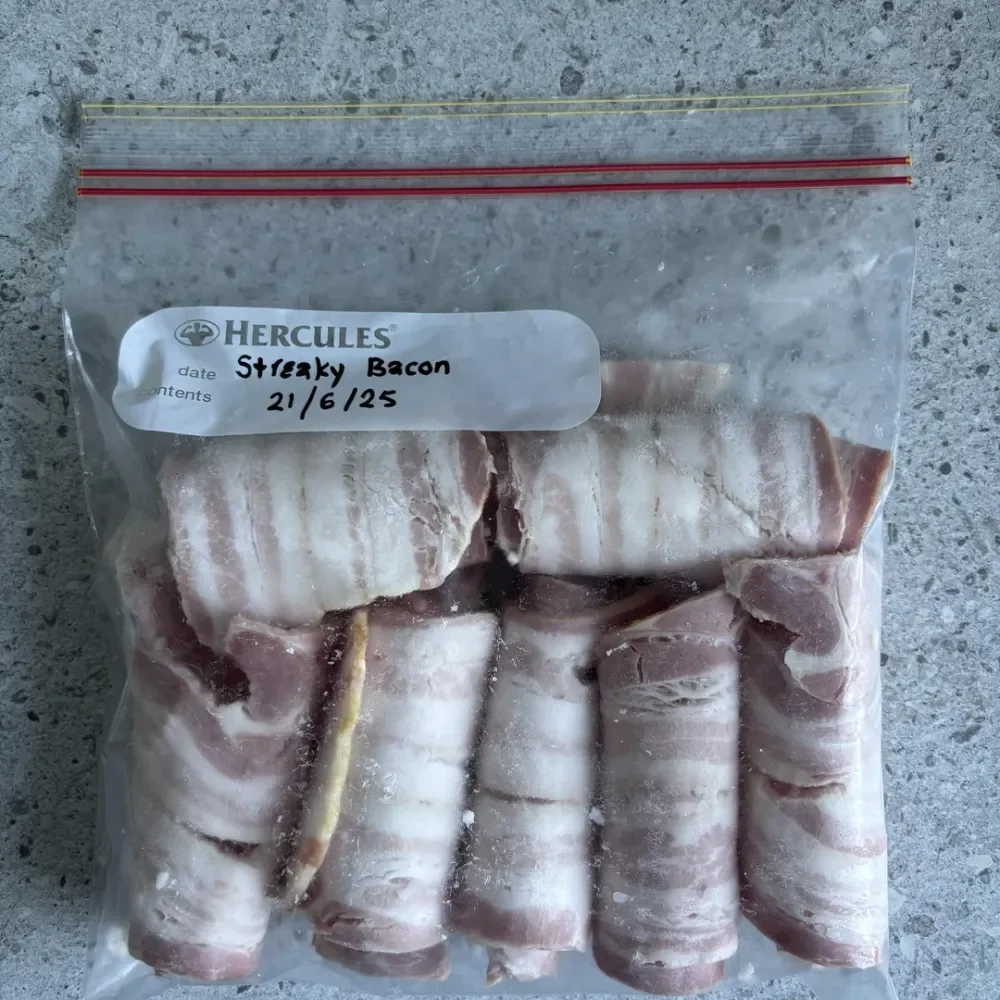
Is frozen bacon the secret to longevity?
I studied behavioural science and, throughout my life, I’ve tried every behavioural hack you can think of to improve my health and happiness. Years ago, I taught my girls that if they wanted to stop doing something, they just needed to make it a little more difficult to do.
They needed to add some resistance.
My daughter loves bacon, especially the stuff you get in Britain, and she knew she wouldn’t be able to control herself if it was just there, ready to be thrown in the microwave.
So she freezes it. Now if she wants it, she has to plan and wait.
It’s such a good hack, I’m annoyed I hadn’t thought of it myself.
She doesn’t eat less bacon because she suddenly developed superhero willpower. She eats less bacon because she made it slightly harder to act on impulse.
The science: why “making it harder” works so well
Most of our daily behaviour isn’t a decision. It’s a reflex.
We see a cue (bacon in the fridge, biscuits on the desk, a Slack ping, a “quick” meeting invite), and we act. Habit researchers call this automaticity. Behavioural economists call the underlying problem present bias: we overvalue what feels good now and undervalue what’s good later.
We can try to “be strong”, but it’s tough.
An easier, more effective solution is to redesign our environment by adding a little friction: a tiny bit of resistance between impulse and action.
Want to eat fewer biscuits? Just move them further away.
A classic study tracked how many sweets office workers ate depending on where the sweets were placed. When chocolates were on the desk, people ate 8.6 a day. Put them in a drawer and it dropped to 5.7. Put them two metres away and it fell to 3.0. “How visibility and convenience influence candy consumption” (Appetite, 2002)

The further the sweets are from your hands, the less you eat.
At Google, they ran an internal experiment nicknamed “Project M&M”. In one office, they moved chocolate into opaque containers and made healthier snacks more visible. The New York office reportedly consumed 3.1 million fewer calories from M&Ms over seven weeks.
They also reduced the size of their plates in the canteen and served the vegetables first, so when people got to the meat their plates were already full.
The pattern is consistent: when you reduce the number of in-the-moment decisions people have to fight, you reduce unwanted behaviour.
And importantly: this isn’t about controlling people. It’s about designing a workplace that doesn’t constantly drain them.
Practical office “resistance” ideas (tiny changes, big impact)
Reduce pointless meetings
Add one required field to invites: “What decision are we making?”
If it’s blank, the meeting doesn’t get accepted.
Stop boring presentations
At Amazon, they banned the use of Powerpoint and people have to prepare a memo for everyone. Just making it difficult to give poor presentations, stopped them!
Stop out-of-hours communication
Make it harder to check work chat at home. For example: remove work chat from phones by default, require re-login, or introduce a deliberate “speed bump” (even just logging in via browser rather than an app).
At a recent workshop I ran, the team said they wanted fewer meetings added to their calendars. They came up with a very simple solution: everyone blocked out 10:00–14:00. Turns out that making it a tiny bit harder for their managers to schedule meetings was enough to discourage them from doing it in the first place. Unsolicited meeting invites dropped by almost 50%.
Tip of the week
Look at your latest engagement survey (or just chat to your team) and see what they want less of. Then think of a way of adding 30 seconds of resistance.
Not a ban. Not a policy. Not a lecture.
Just a small “freeze the bacon” moment that gives people time to choose.
Don’t ban things. Don’t roll out policy changes. No one likes being told what to do.
Just make it a tiny bit harder, so people need to think before they act.
To be happy at work, people need to feel they’re being heard. If your team sees you taking an action, however small, to address their needs, they’ll appreciate it.